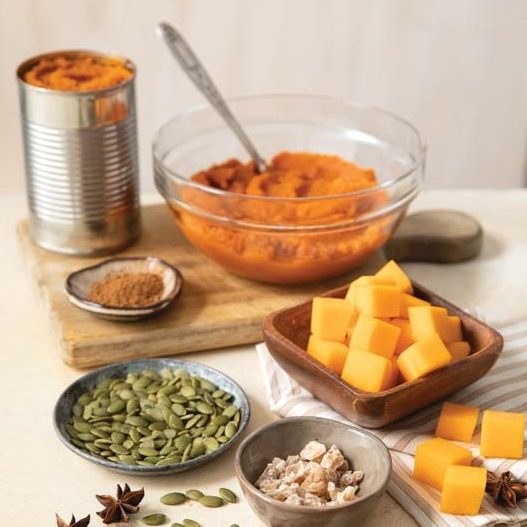
Cast your mind to a time before pumpkin spice lattes, jack-o-lanterns, or Washington Irving’s gothic tale, Sleepy Hollow. It’s almost impossible to imagine an age when the pumpkin wasn’t the grand orange harbinger of the fall season and the unofficial crest of autumn. In other words, pumpkin isn’t just a fall pantry essential—it’s a cultural icon. When you’re working with an icon, it’s best to approach the experience with a certain level of respect, reverence, and research.
First, let’s tackle fresh pumpkin. Though fresh pumpkin can yield delicious roasted pumpkin seeds, most bakers prize it for the mildly sweet, divinely creamy pumpkin puree they can make out of it. There are hundreds of varieties of pumpkins out there, but the most commonly found pumpkins at grocery stores are the giant pumpkins destined to become jack-o’-lanterns. These are great for carving but not as good for eating. If you’re planning to make your own purée, grab smaller, petite pumpkins, often called sugar pumpkins, which have a higher sugar content and less-stringy texture.
However, in our modern world of convenience, canned pumpkin is often the first thing a baker reaches for. Canned pumpkin can run the gamut when it comes to quality. Some brands present an amalgam of different squash and slap the “pumpkin” label on it without a second thought. If you want to avoid being duped, check the ingredients part of the can’s label—companies are obligated to list whether they use pumpkin or squash medley to make their puree. Still, every brand uses different kinds of pumpkin, some sweeter than others. A favorite quality canned pumpkin brand of ours is Libby’s. Libby’s uses sweet and tender Dickinson pumpkins for their puree and is 100% organic.
 Now that you have a handle on your two main sources for pumpkin puree, what should you do with it? As synonymous with a Thanksgiving feast as turkey and cornbread dressing, pumpkin pie may be everyone’s first thought when it comes to utilizing pumpkin puree. Pumpkin puree’s sweet, creamy features lend itself well to any custardy dessert, from pie to cheesecake. But there’s a few ingredients to add in to make sure your pumpkin transforms from a mash into a custard-like filling. The proteins in egg whites often help congeal the filling, while the fat in egg yolks aid in keeping the pumpkin from lumping into curds. For our Speculaas-Pumpkin Chiffon Pie, we whip our egg whites into a meringue before folding it into our yolk-rich pumpkin mixture. Other ingredients are used to counterbalance the excess water pumpkin puree brings to the filling. Evaporated milk contains around 60% less water than its milk counterpart. To drive off water, the milk is heated, which slightly caramelizes the milk sugars. Because of this, evaporated milk is a great way to maintain a thicker custard while adding delicate caramelized notes.
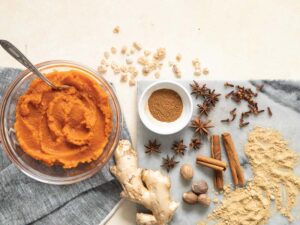
There are two more pumpkin adjacent products that bakers will often reach for: pepitas, the crunchy green seeds that come from the pumpkin, and pumpkin pie spice, the spice blend meant to best compliment the orange gourd. Pepitas offer a pop of color and crunch to baked goods, making them a prime choice for garnishment flair (see our Rosemary-Butternut Squash Milk Bread Buns). Meanwhile, pumpkin pie spice is akin to the pumpkin spice latte; it offers a nod toward everyone’s favorite pie but doesn’t necessarily involve any pumpkin. Featuring a warm quintet of fall spices, pumpkin pie spice comes in hot with the cinnamon and ginger and finishes strong with the sweet-smelling notes of nutmeg, allspice, and cloves. In fact, the spice combo works equally well in baked goods that don’t contain any pumpkin, like our Pumpkin Spice Souffle Pancakes. Still, we recommend you kick off your fall baking with plenty of pumpkin packed desserts.