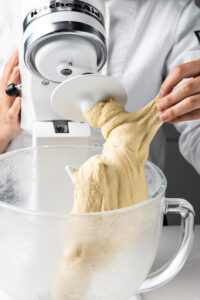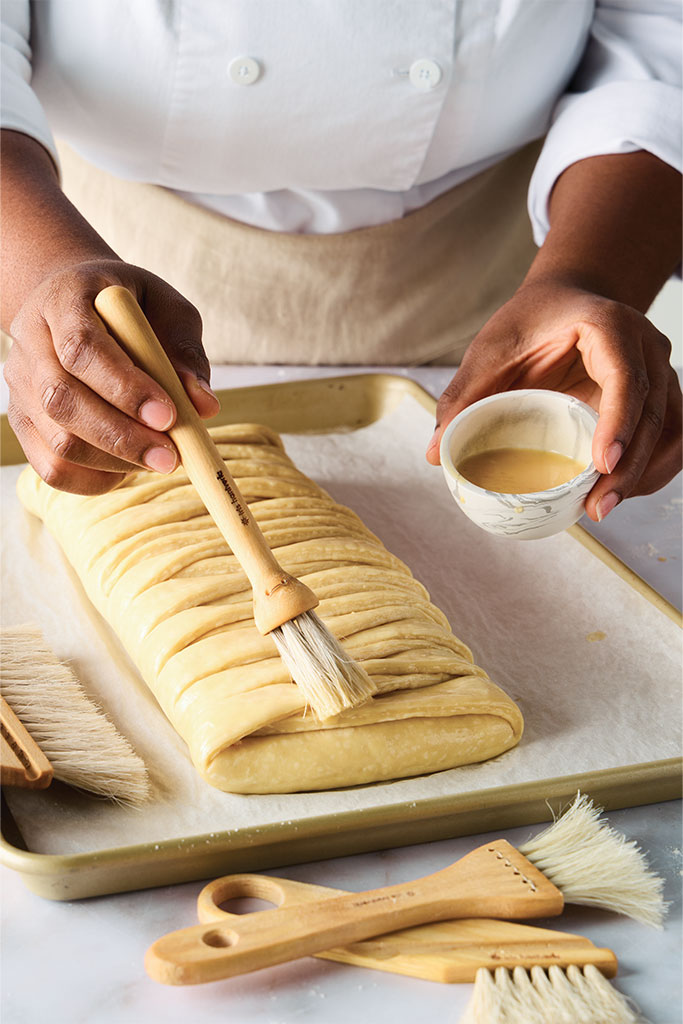
Danish dough occupies a very comfortable middle ground in the world of laminated pastry. Known as wienerbrød in Danish—literally “Viennese bread”—this dough traces its roots to Austrian baking traditions. It relies on alternating layers of butter and dough to rise through steam, and it’s enriched with milk, eggs, and sugar, which makes it softer and noticeably more forgiving. The enrichment isn’t just for flavor—it gives Danish dough the flexibility to be shaped, braided, twisted, filled, and cut with far less resistance than lean laminated doughs.
Click here to download a printable PDF of this lesson.
INGREDIENT BREAKDOWN
In laminated dough, every ingredient negotiates strength and tenderness. Danish dough is a balance of elasticity, fermentation, and fat layering—each component shaping lift, flake, and flavor.
WHOLE MILK: Milk contributes water for gluten development, lactose for gentle browning, and milk proteins for structure. Its fat (about 3% to 4%) tenderizes slightly, softening the crumb compared to water-based doughs. Lactose is not consumed by yeast, so it remains available for Maillard browning, encouraging deep golden color during baking.
EGG: A whole egg brings both water and fat, plus emulsifiers (notably lecithin in the yolk). The proteins coagulate during baking, reinforcing structure between laminated layers. The yolk’s fat enriches the dough and improves extensibility, allowing it to roll thin without tearing.
EGG YOLK: An extra yolk increases richness and pliability. Lecithin strengthens the dough’s ability to hold a stable emulsion—important when butter is worked in later. Yolk also deepens color and contributes to a more tender, slightly custardy crumb.
INSTANT YEAST: Instant yeast disperses directly into dry ingredients. It metabolizes simple sugars, producing carbon dioxide and organic acids. In Danish dough, fermentation builds internal pressure and flavor—but it must be controlled. Over-fermentation weakens gluten and compromises lamination; underfermentation yields tight layers and limited lift. (We used Red Star® Quick-Rise™ Instant Yeast.)
BREAD FLOUR: Higher in protein (typically 12% to 13%) than all-purpose flour, bread flour forms a stronger gluten network. This elasticity is essential for lamination—the dough must stretch thin without tearing and withstand repeated rolling. A weaker flour would rupture under the mechanical stress of folding. (We used Bob’s Red Mill® Bread Flour.)
GRANULATED SUGAR: Sugar feeds yeast in the early stages and slows gluten development slightly by competing for water. This moderates toughness, keeping the dough extensible. Sugar is also hygroscopic, helping retain moisture in the finished pastry and contributing to caramelization and browning in the oven.
UNSALTED BUTTER (IN DOUGH): The initial butter mixed into the dough softens gluten strands by coating some proteins in fat. This creates a more pliable base dough—strong enough to laminate but not leathery. Using unsalted butter allows precise salt control, especially important in enriched doughs.
UNSALTED BUTTER (BUTTER BLOCK): The butter block is structural. At roughly 80% to 84% fat, butter contains a small percentage of water that turns to steam in the oven. When encased in dough and rolled thin, this steam separates layers, producing flake and lift. Butter’s plasticity—firm but bendable at cool room temperature—is critical. Too cold, it shatters and punctures the dough; too warm, it smears and eliminates defined layers. (We used Plugrà® European Style Unsalted Butter.)
KOSHER SALT: Salt strengthens gluten by tightening protein bonds, which improves elasticity and helps the dough maintain structure during rolling. It also regulates yeast activity—without salt, fermentation would be too rapid and uncontrolled. Flavor-wise, salt sharpens sweetness and prevents the pastry from tasting flat.
TOOLS OF THE TRADE
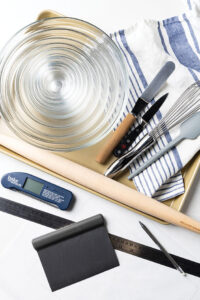
The right tools keep laminated edges square, butter pliable, and layers sharply defined.
GLASS MIXING BOWLS: Because glass is nonreactive and slow to change temperature, it helps maintain a consistent 75°F (24°C) proofing environment—critical for controlled yeast activity before the dough is chilled overnight. Its smooth surface also allows the dough to release cleanly after proofing without deflating the structure you’ve just built. (Pictured: Glass Mixing Bowl 10-Piece Set.)
ROLLING PIN: Laminated dough depends on uniform thickness; even compression from center to edge keeps butter layers intact and prevents weak spots that can rupture during baking. Steady, controlled rolling—not force—preserves structure, alignment, and flake. (Pictured: Williams Sonoma French Tapered Olivewood Rolling Pin.)
BENCH SCRAPER: A bench scraper helps keep edges straight, lifts dough cleanly from the counter without stretching, and allows precise alignment before folding. Clean edges create clean layers. Ragged edges multiply imperfections with every turn. (Pictured: Williams Sonoma Goldtouch® Pro Silicone and Nylon Bench Scraper.)
RULER: Measuring ensures consistent rectangles and symmetrical folds. Uneven rolling leads to thick and thin zones, which bake into uneven lift.
PARING KNIFE: Trimming the dough’s edges before shaping exposes clean, visible layers, allowing maximum rise and preventing compressed sides from sealing shut in the oven. (Pictured: WÜSTHOF Classic Paring Knife, 3½”.)
PARCHMENT PAPER: Drawing exact dimensions for the butter block on parchment ensures even thickness—the most important factor in clean lamination.
BAKING SHEET: The chilling dough requires a flat, rigid surface. Warped or flexible surfaces can distort the rectangle shape, leading to misaligned folds later. (Pictured: Williams Sonoma Goldtouch® Pro Nonstick Half Sheet.)
OFFSET SPATULA: Thin and flexible, this is essential when spreading fillings or transferring delicate shaped pastries later. Its narrow blade allows movement without compressing laminated layers—preserving lift. (Pictured: Williams Sonoma Olivewood Offset Icing Spatula.)
KITCHEN TOWEL: Even slight skin formation on the dough can cause tearing during rolling and disrupt lamination, but a clean kitchen towel placed over dough during rests prevents surface drying. It also helps maintain a stable, draftfree microclimate during fermentation. (Pictured: Linen Hand Towel –Stonewashed– White with Blue Stripes.)
CLASSIC DANISH DOUGH
WHAT EXACTLY IS LAMINATION?
Lamination is the process of creating alternating layers of butter and dough—layers that expand dramatically in the oven through steam power.
It begins with two separate components: a détrempe (the dough) and a butter block. The butter is enclosed inside the dough and then rolled and folded repeatedly. Each fold multiplies the number of butter layers, which ultimately gives laminated pastries their height, flake, and dramatic interior structure.
Once the pastry hits the oven, the water locked inside both the butter and the dough turns to steam. That steam forces the layers apart from the inside while the melting butter tenderizes the dough and distributes flavor. The goal isn’t puffiness—it’s separation. Height comes as a byproduct.
HOW TO PLASTICIZE BUTTER
Butter is surprisingly opinionated. Too cold and it shatters. Too warm and it smears itself enthusiastically into the dough, taking your layers with it.
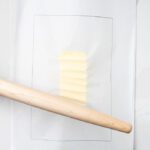
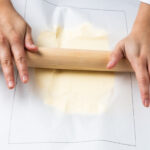
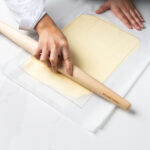
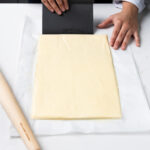
Plasticizing butter—pounding it between sheets of parchment paper into an even slab—works it into a flexible, malleable state so that it laminates cleanly without smearing. The butter reaches a state where it can remain cold yet bend without cracking and stretch without melting. Properly plasticized butter moves with the dough, which is exactly what lamination requires. If there’s one step that solves most lamination problems before they happen, this is it.
THE LOCK-IN
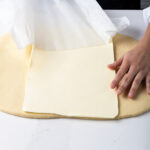
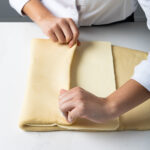
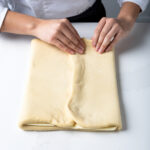
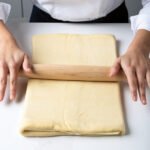
How you enclose the butter determines how quickly and evenly your layers build. For Danish dough, we use the French lock-in. The butter block is rolled to half the length of the dough. The exposed dough is brought together over the butter and sealed to create three layers.
TAKING TURNS
Turns are the repeated rolling and folding that build lamination, and in this stage, accuracy matters more than strength.
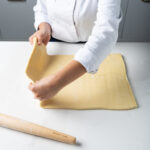
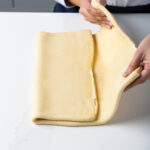
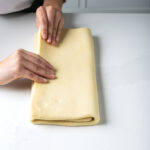
For a single turn (letter fold), the dough is rolled into a rectangle and folded into thirds like a letter. This is the most controlled and forgiving fold, making it ideal for Danish dough. After each turn, the dough rests. This allows gluten to relax and butter to firm back up—both essential before rolling again. Rotate the dough 90 degrees between turns to ensure you are rolling it out in the opposite direction that it has already been stretched.
Classic Danish Dough
Ingredients
- 1 cup (240 grams) whole milk, room temperature
- 1 large egg (50 grams), room temperature
- 1 large egg yolk (19 grams), room temperature
- 1 (0.25-ounce) package (7 grams) instant yeast
- 4 cups (508 grams) bread flour
- ⅓ cup (67 grams) granulated sugar
- 1¼ cups (283 grams) unsalted butter, softened and divided
- 1 tablespoon (9 grams) kosher salt
Instructions
- In the bowl of a stand mixer, whisk together milk, egg, egg yolk, and yeast by hand; add flour, sugar, 3 tablespoons (42 grams) butter, and salt. Using the dough hook attachment, beat at low speed until dough comes together, about 1 minute; beat until dough pulls away from sides of bowl and is smooth when a small amount is pinched off, 5 to 8 minutes. Turn out dough onto a lightly floured surface; shape into a smooth ball.
- Spray a large bowl with cooking spray. Place dough in bowl, turning to grease top. Cover and let rise in a warm, draft-free place (75°F/24°C) until doubled in size, about 2 hours.
- Line a baking sheet with parchment paper. Lightly dust parchment with flour.
- Turn out dough onto a lightly floured surface, and gently shape into a 10x8-inch rectangle. Place on prepared pan. Cover tightly with plastic wrap, and refrigerate overnight.
- Using a pencil, draw a 12x8-inch rectangle on a sheet of parchment paper; turn parchment over. Place remaining 1 cup plus 1 tablespoon (241 grams) butter on prepared parchment. Cover with a second sheet of parchment.
- Using a rolling pin, pound butter to flatten slightly. Using rolling pin and a bench scraper, shape butter to fit inside drawn rectangle, keeping edges straight and even. (If butter gets too soft to work with, refrigerate for 5 minutes before continuing.) Wrap butter fully in parchment paper, and refrigerate for at least 2 hours or overnight.
- Freeze dough for 15 to 30 minutes.
- Let butter block stand at room temperature until pliable, 10 to 15 minutes.
- On a lightly floured surface, roll dough into a 16x12-inch rectangle. Unwrap butter block; place crosswise in center of dough. Fold dough over butter block, meeting in center and stretching and lightly pressing to seal dough around butter block. Rotate dough 90 degrees, and immediately roll into an 18x12-inch rectangle (about ⅛ inch thick). Fold in thirds like a letter; rotate 90 degrees, and roll dough into an 18x12-inch rectangle. Fold in thirds like a letter. Wrap dough in plastic wrap, and freeze for 15 to 30 minutes.
- Repeat rolling and folding dough one more time. Wrap dough in plastic wrap, and refrigerate for 1½ hours. (Alternatively, wrap dough tightly in plastic wrap, and freeze for up to 3 months. Let frozen dough thaw overnight in refrigerator before using.)
QUICK DANISH DOUGH
THE BUTTER-SMEARING METHOD
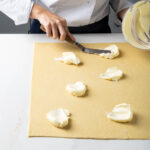
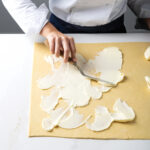
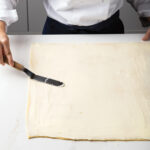
Quick Danish Dough skips the butter block entirely. Instead, softened butter is smeared directly onto the dough and folded in stages. This creates butter-rich zones rather than precise sheets. When folded and rolled, these zones stretch into thin streaks and pockets of butter that behave much like traditional laminated layers once they hit the oven.
SCORING AND FOLDING THE QUICK DOUGH
This structured folding method keeps butter evenly distributed and gives Quick Danish Dough its surprisingly layered interior.
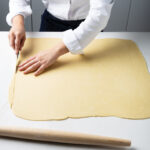
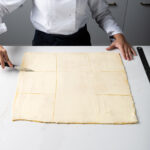
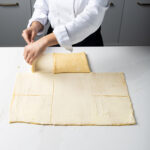
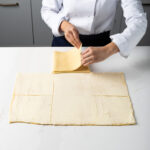
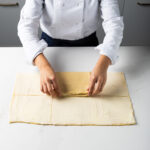
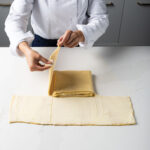
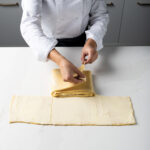
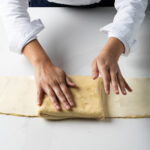
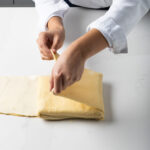
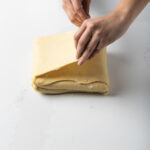
After the butter is smeared evenly across the dough, the surface is lightly scored into equal sections, taking care not to cut all the way through. These lines act as guides, giving the dough clear instructions on where to cut and fold. Each fold creates more places where butter separates the dough. The result isn’t dramatic, architectural lamination—but it is controlled, reliable, and exceptionally tender.
WHICH DANISH DOUGH SHOULD I USE?
CLASSIC DANISH DOUGH: When you want height, definition, and dramatic layers—ideal for braids, showpiece pastries, and minimal fillings.
QUICK DANISH DOUGH: When time is short and tenderness matters more than sharp laminatioN—perfect for spirals, filled pastries, and everyday baking.

Quick Danish Dough
Ingredients
- 1 cup (240 grams) whole milk, room temperature
- 1 large egg (50 grams), room temperature
- 1 large egg yolk (19 grams), room temperature
- 2¼ teaspoons (7 grams) instant yeast
- 4 cups (508 grams) bread flour
- ⅓ cup (67 grams) granulated sugar
- 1¼ cups (283 grams) unsalted butter, cubed, room temperature, and divided
- 1 tablespoon (9 grams) kosher salt
Instructions
- In the bowl of a stand mixer, whisk together milk, egg, egg yolk, and yeast by hand; add flour, sugar, 3 tablespoons (42 grams) butter, and salt. Using the dough hook attachment, beat at low speed until dough comes together, about 1 minute; beat until dough pulls away from sides of bowl and is smooth when a small amount is pinched off, 5 to 8 minutes. Turn out dough onto a lightly floured surface, and shape into a smooth ball.
- Spray a large bowl with cooking spray. Place dough in bowl, turning to grease top. Cover and let rise in a warm, draft-free place (75°F/24°C) until doubled in size, about 2 hours.
- Line a baking sheet with parchment paper. Lightly dust parchment with flour.
- Turn out dough onto a lightly floured surface, and gently shape into a 10x8-inch rectangle. Place on prepared pan. Cover tightly with plastic wrap, and refrigerate overnight.
- In a small bowl, stir remaining 1 cup plus 1 tablespoon (241 grams) butter with a small spatula until soft and creamy.
- Freeze dough for 15 to 30 minutes.
- On a very lightly floured surface, roll dough into an 18½-inch square. Using a sharp knife, trim ¼ inch from all sides. Using a small offset spatula, spread butter evenly onto dough. Using a ruler, carefully score buttered surface of dough, marking dough into 9 (6-inch) squares. (Do not cut through dough.)
- Using a sharp knife, in bottom third of dough, carefully make a 6-inch cut to the left and the right scoring of dough; repeat cuts in top third of dough. Working from left to right and bottom to top, carefully fold marked squares, one onto another until dough is a 6-inch square and about 1¾ inches thick. Wrap dough in plastic wrap, and refrigerate for 1½ hours or freeze for 20 to 30 minutes.
- On a lightly floured surface, roll dough into an 18x12-inch rectangle (about ⅛ inch thick). Fold in thirds like a letter. Wrap dough in plastic wrap, and refrigerate for 1½ hours or freeze for up to 3 months. Let frozen dough thaw overnight in refrigerator before using.